Losa del tiempo
La Carriona Cemetery, Avilés
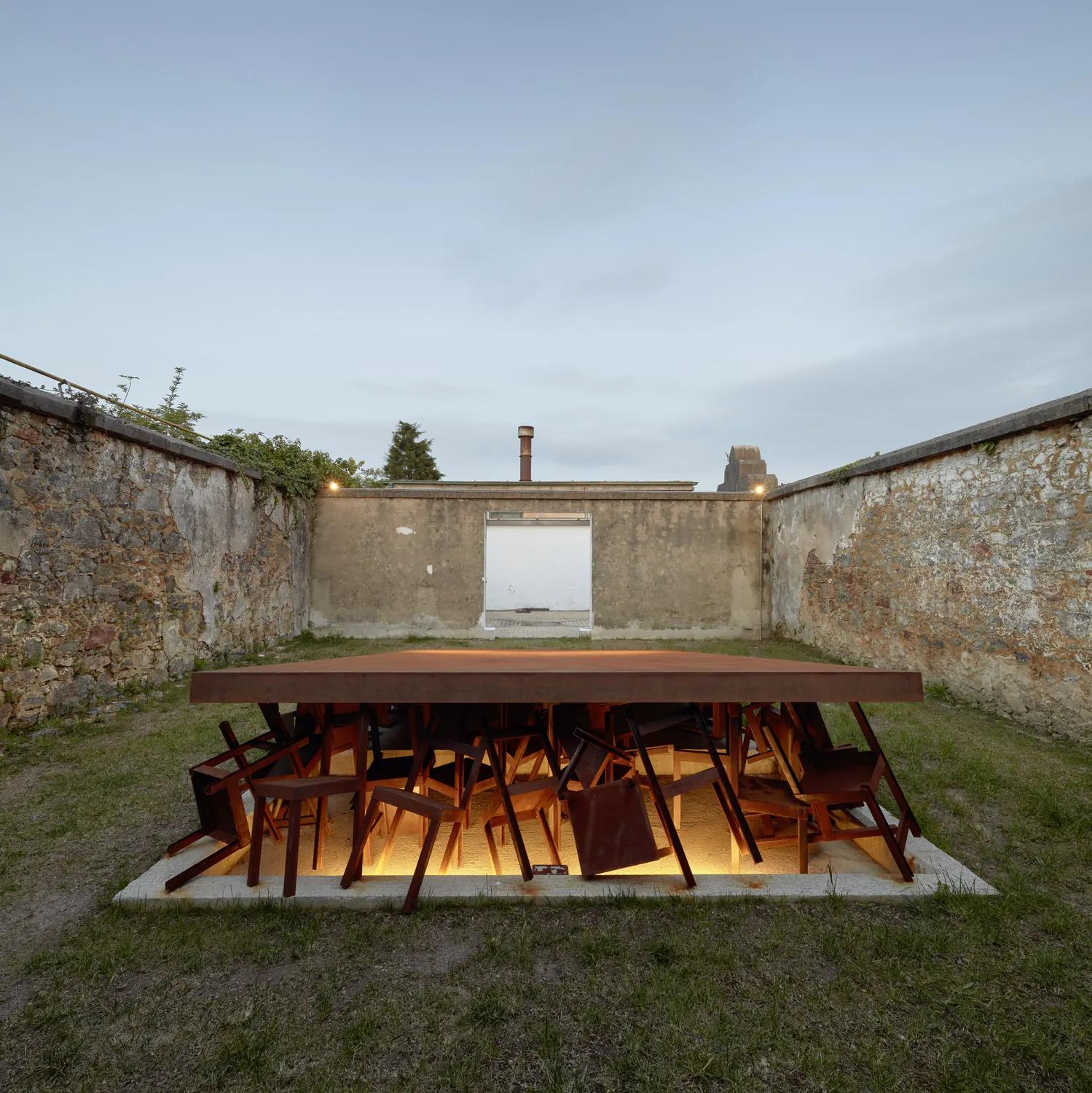
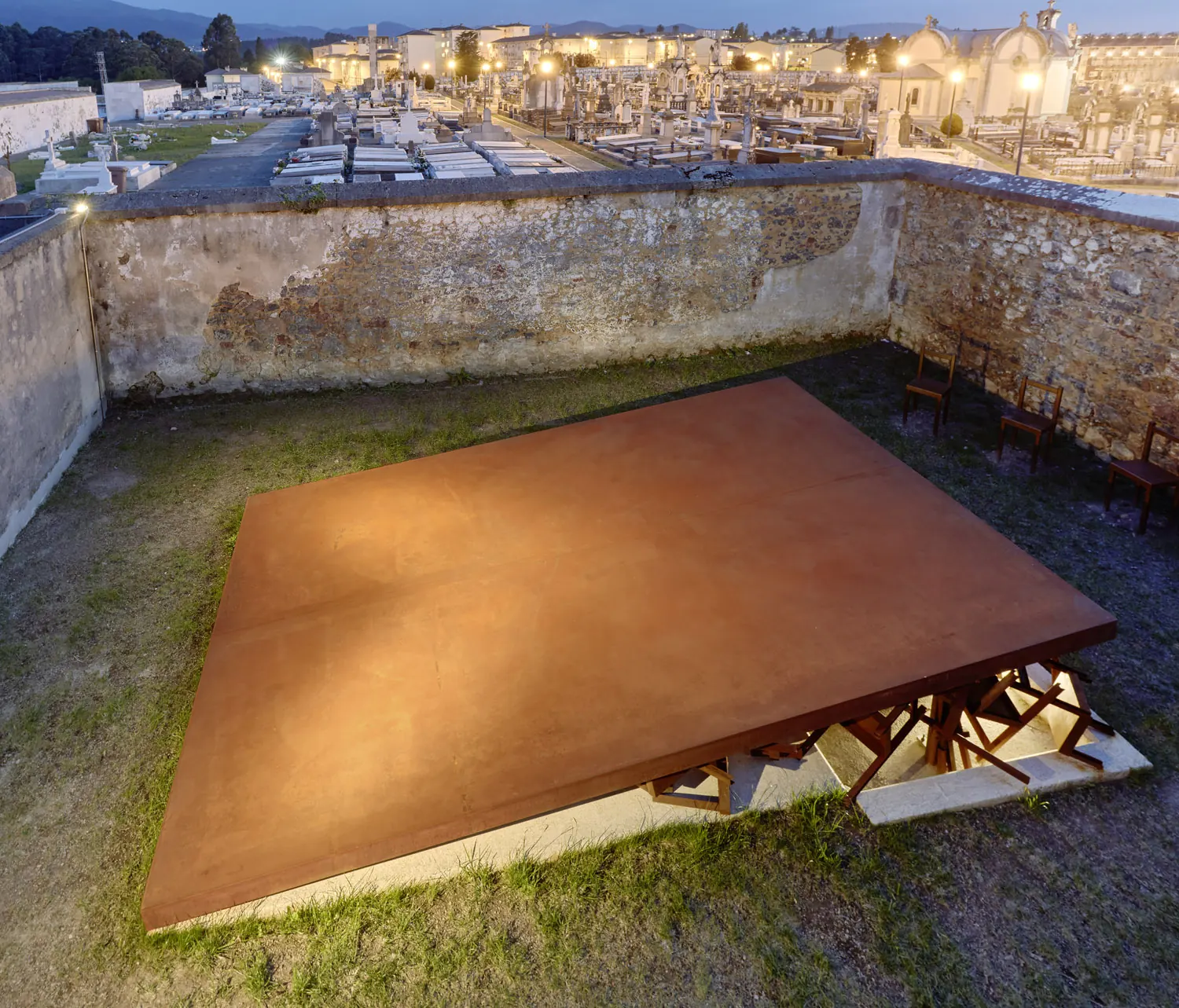
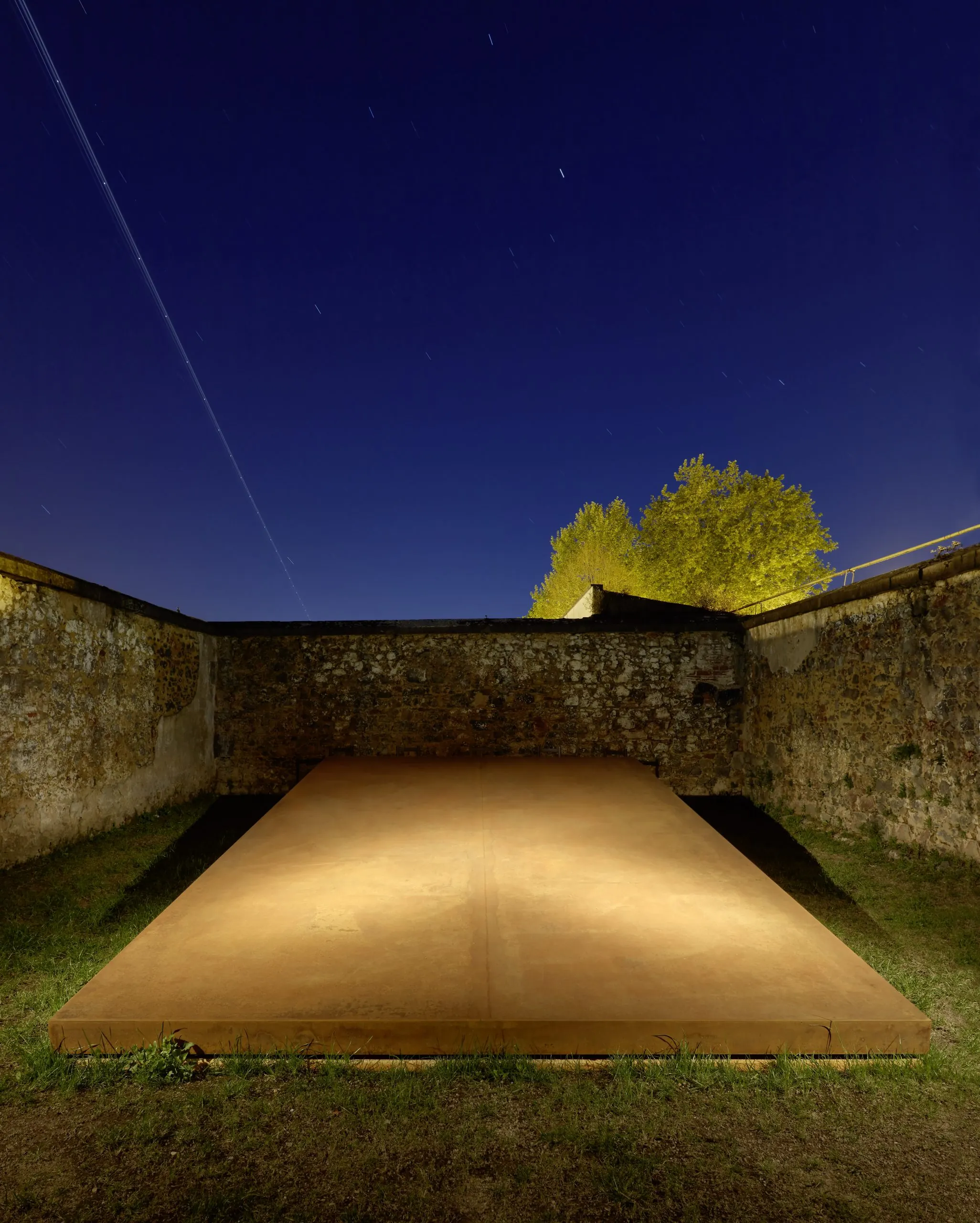
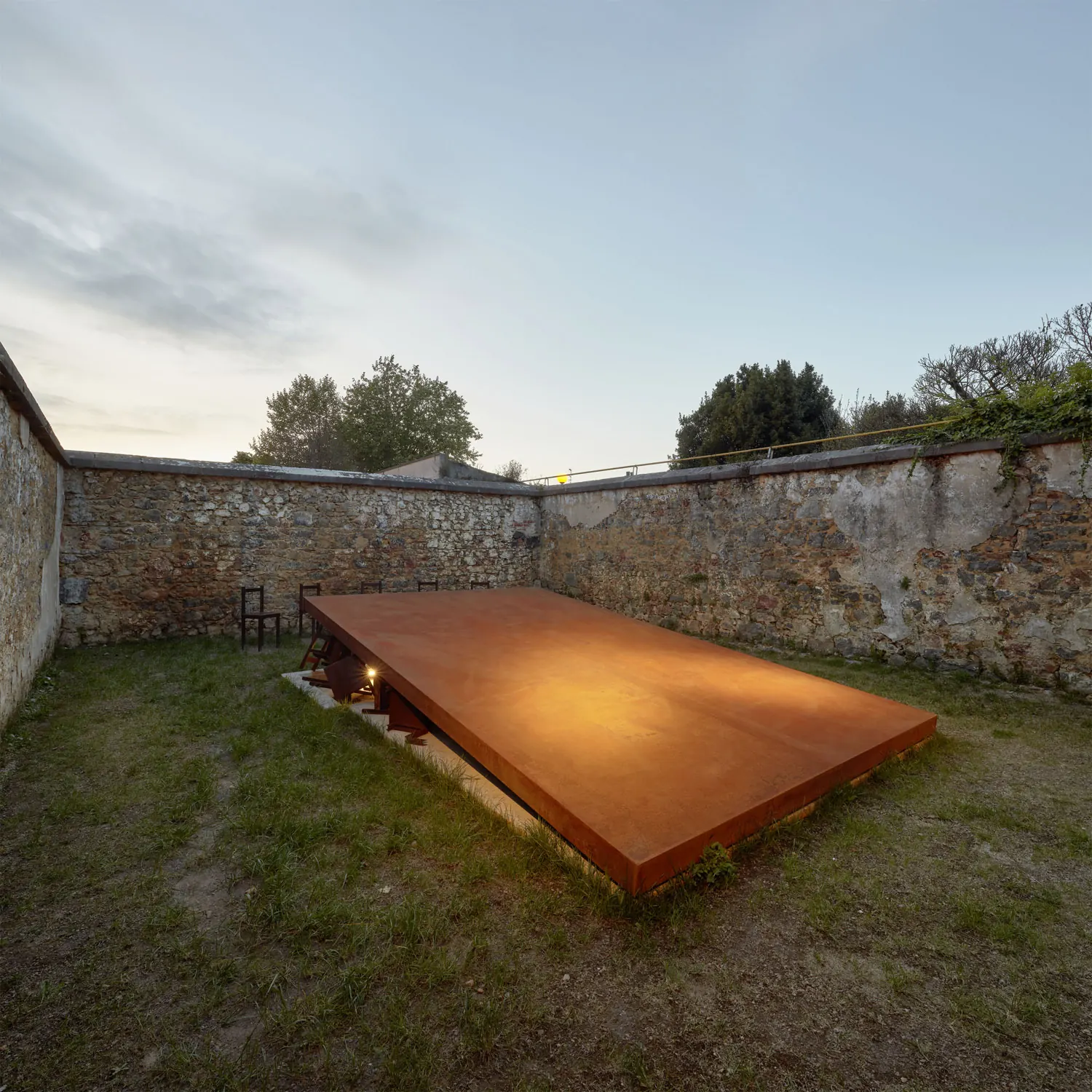
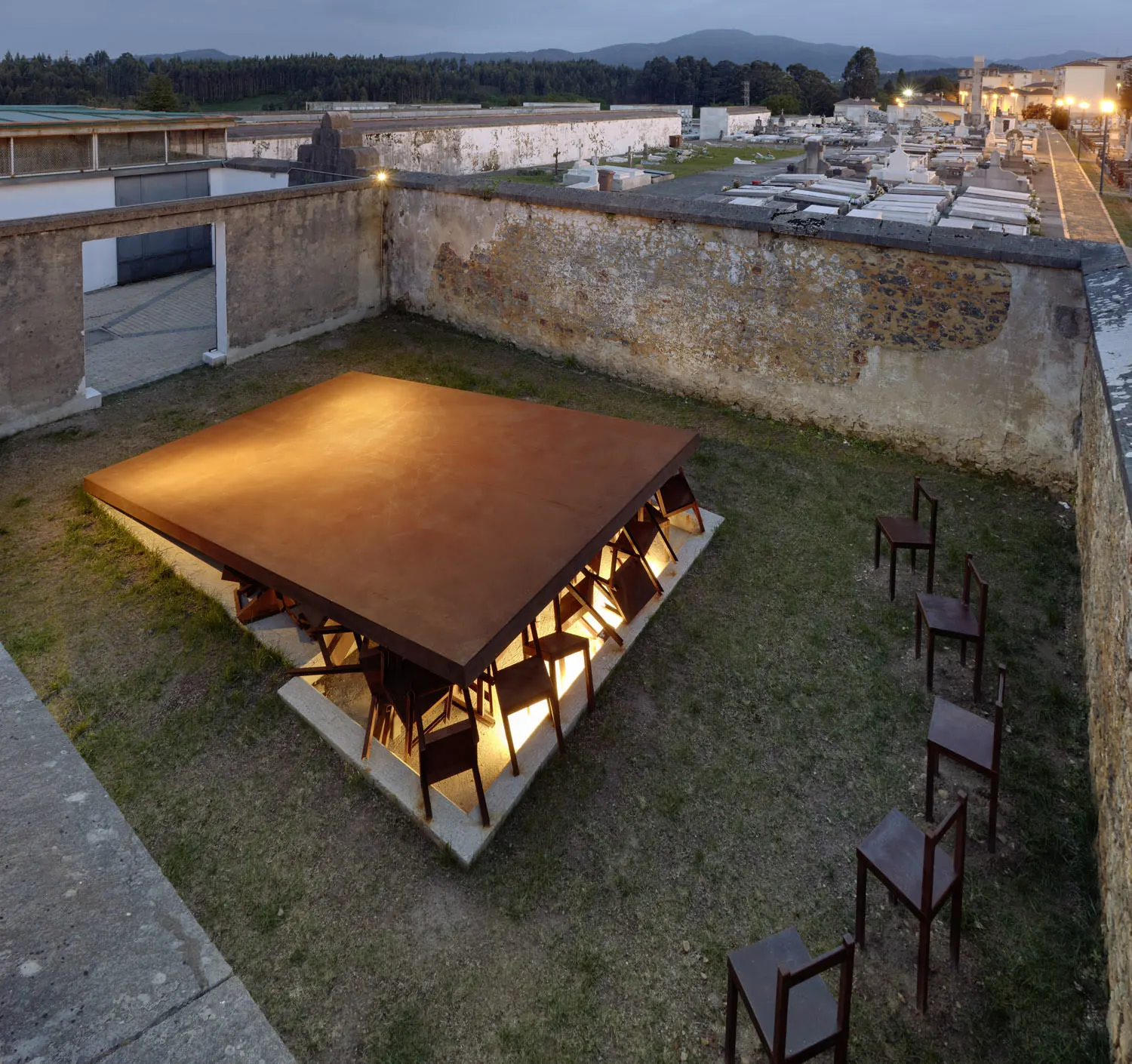
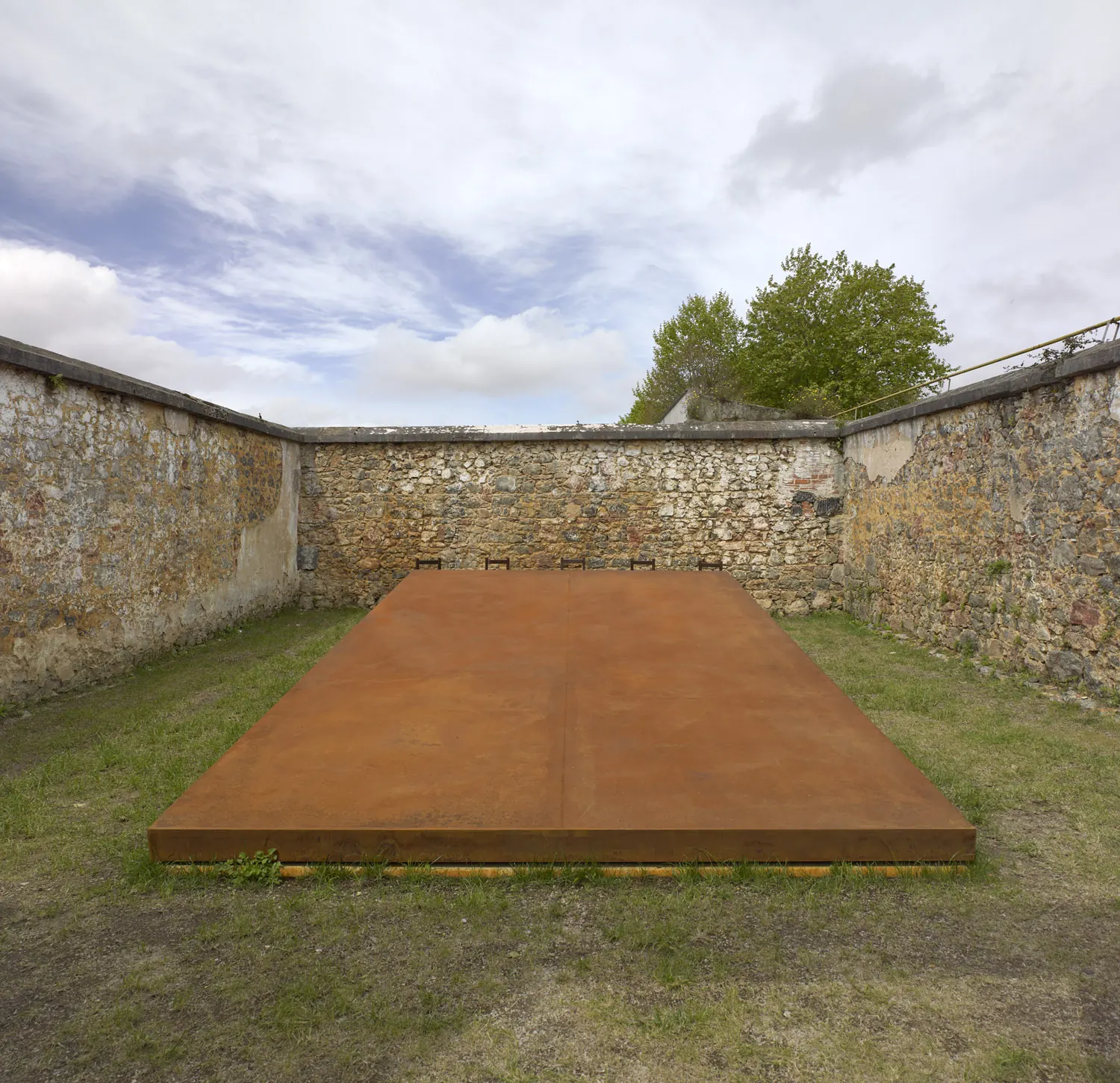
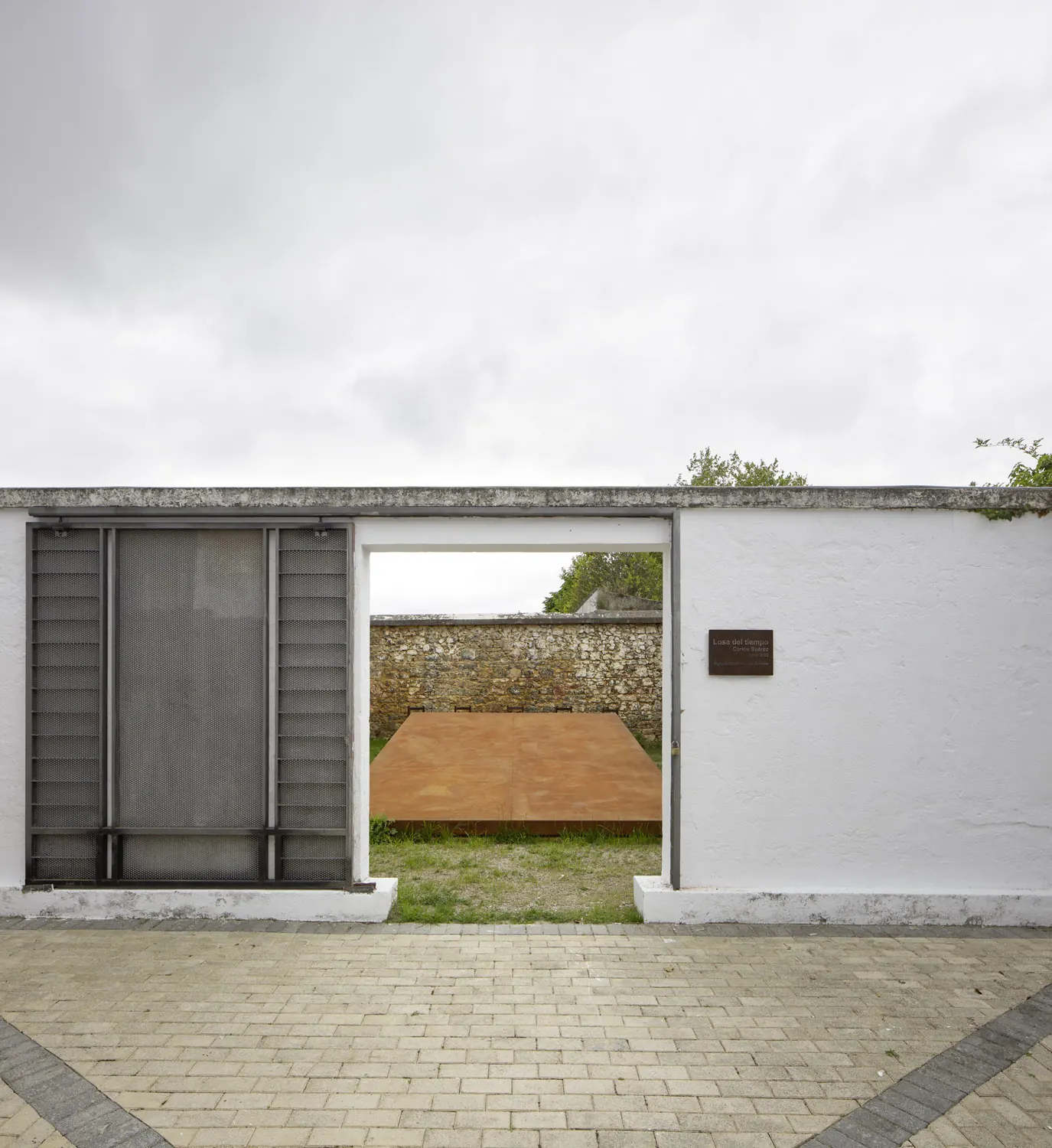
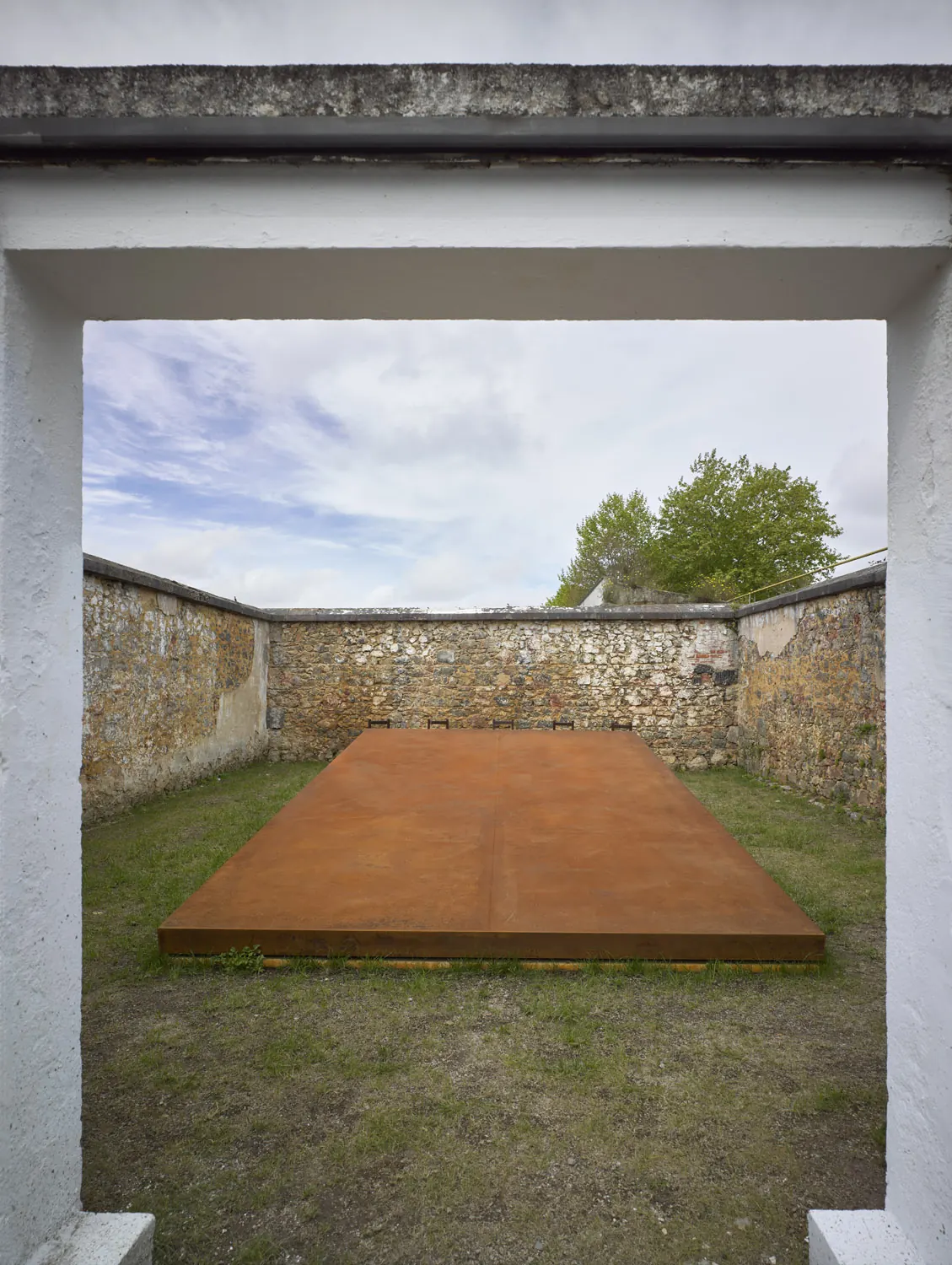
A space of memory in the former ossuary of La Carriona: a 6.5 × 4.20 m Corten steel slab raised above a tangle of chairs, facing five other chairs that invite us to look at what remained hidden.




- Artist
- Carlos Suárez
- Curator
- Jaime Luis Martín
- Historical documentation
- Pablo Martínez Corral
- Production
- Ayuntamiento de Avilés
- Fabrication
- Metalaser Norte
- Dimensions
- 6.5 × 4.20 m
- Photography
- Marcos Morilla, 2023
Read the full text
«The central piece proposed for the La Carriona Municipal Cemetery took shape in the workshop of the professor and artist Javier Tudela in Aguete (Pontevedra), who became involved and embraced the doubts that every creative process entails — a debate that goes beyond the perception of a material and involves its cultural situation and conceptualisation. With Losa del tiempo [Slab of time], the project finally presented, the result of artistic and documentary research, of dialogues and encounters, the aim is to create a space of memory with a work in Corten steel measuring 6.5 m long and 4.20 m wide, raised slightly above the ground so that beneath the slab it can hold a chaotic tangle of chairs — as indeterminate as the number of victims who still lie in roadside ditches — “an object with a strong symbolic charge, a pregnant form (…) a theatrical, poetic, artistic element”[1], made of the same material as the slab and arranged in disorder. Facing this raised slab are five more chairs, also in Corten steel, inviting us to look at what remained hidden. Five is the symbol of the human, “of the four cardinal points plus the centre”[2], of the five senses, a number that unites heaven and earth, past and present. The piece, with its minimalist accent, coexists with figurative registers, reformulating movements and times, re-evaluating cultural symbols in spaces of memory and embracing a site-specific work, conceived for this place, resisting its integration as an object of consumption. This monument does not have the rhetoric of the victors; it is discreet, not a cry that rises up but an inward lament, without a grandiloquent structure, seeking to reconsider the role of the monumental in memory, to converse with absence.
But we can also define this piece as a counter-monument, “a space in which to be and to be present, to be together, where remembrance is at once personal and collective, but where no form is imposed, not even a physical form”[3]. The tradition of the monument offers a triumphalist vision of the past, a hierarchical gaze, offerings to historical figures to whom present-day society seems to owe some historical debt; and yet such symbols have been destroyed or removed in countless countries and periods, as social sensibility changed or people became aware of what they represented. Losa del tiempo does not define a specific time, but it stimulates collective memory. Located in a secluded area of the cemetery, the former ossuary, which one must make a point of visiting, it shows a certain monumental scepticism towards the tradition of the memorial. But this counter-monument also has its own aesthetic: the tears, when it rains, that carry the rust of the Corten steel to the surface, creating a stain that spreads, leaving a trail of rust, just as the lament of the defeated spreads. There is no vertical vision but a gaze towards the ground, recovering the memory, the awareness, the painful experience of those who remained beneath the earth. Because, ultimately, it is one more grave, with the slab raised so that we can look inside but also experience the different memories that make up this piece.
Each visitor will find in this work a polysemic experience: from a remembrance of those who were silenced and forgotten, anonymous beneath the slab of ignominy that we still feel crushing the truth of history, to a necessary dialogue between those who sit down to contemplate the depth of the pain and those chairs, with the absences of the people who once occupied them, swept away by the storm of the murderers. Others will see a passage between memory and democracy, the need to sit down and talk, but without forgetting the many victims left voiceless, who were given no chance of conversation but only the fratricidal noise of bullets. And also, when members of the public sit on the chairs set out for the viewer, they will become integrated into the piece, becoming part of the sculpture.»
— Jaime Luis Martín, extracto de la publicación