Cita con la historia
Capilla de la Trinidad, Museo Barjola, Gijón
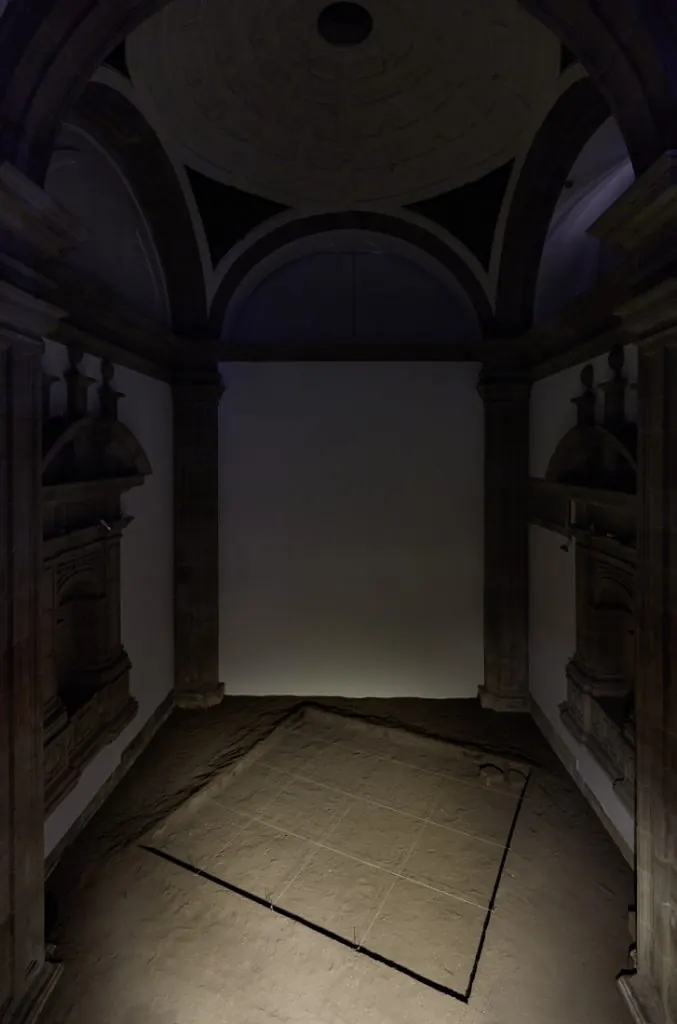
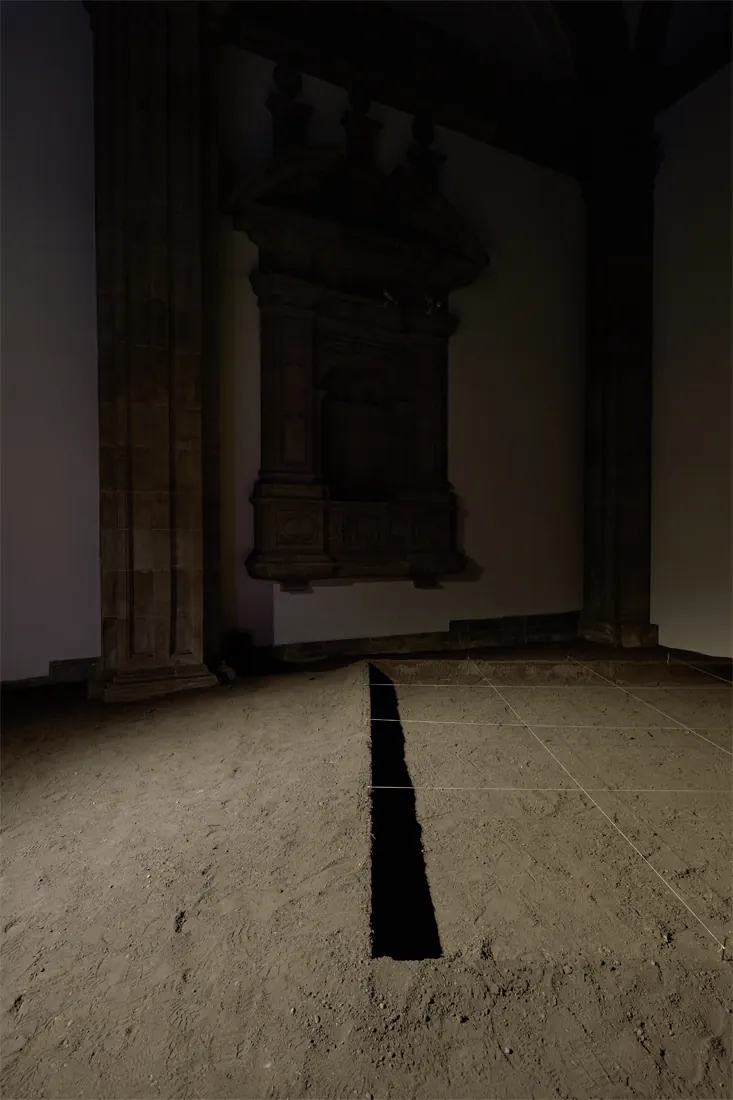
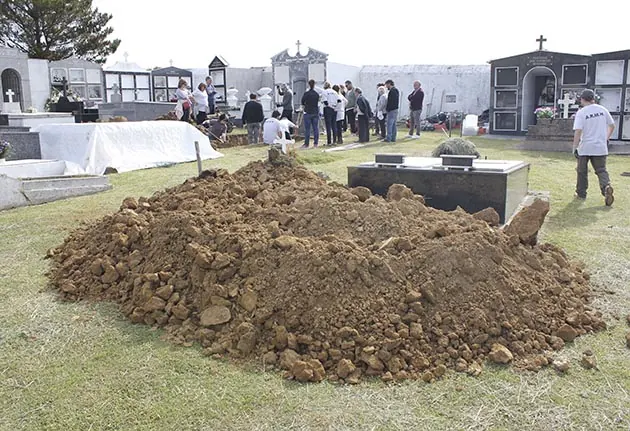
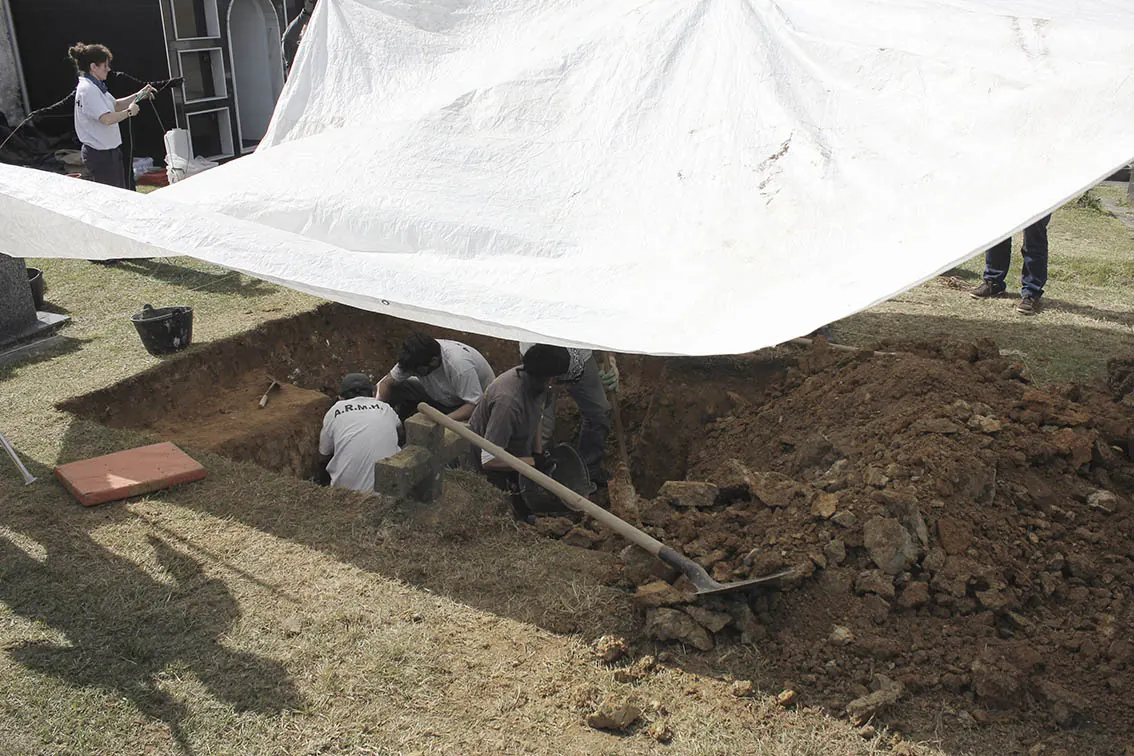
The Capilla de la Trinidad becomes a mass grave: a tribute to those who lost their names, with images of the Bañugues exhumation and a sound archive by Juanjo Palacios.






Publication: Cita con la historia
- Artist
- Carlos Suárez
- Sound piece
- Juanjo Palacios
- Curator
- Jaime Luis Martín
- Research
- ARMH Asturias
- Dates
- 21 December 2017 – 11 March 2018
- Publication
- Design: Marco Recuero. Texts: Elena Vozmediano, Jaime Luis Martín, ARMH. Published by the Museo Barjola
- Photography
- Installation: Marcos Morilla · exhumation: Carlos Suárez
«The Capilla de la Trinidad at the Museo Barjola is thus transformed, through the artist’s intervention, into an excavation site that not only brings to mind the victims of Francoism unearthed in the cemetery of Bañugues and other places in the region, but also alludes to a much earlier historical process. Nor can one ignore the role of the Catholic clergy in establishing and sustaining the Franco regime; by moving the grave into the chapel, the Church is figuratively forced to look squarely at what it did not want to see, or what it covered up. One of the arguments put forward by those who defended burials inside churches, against the “hygienists”, was that the sight of tombs was a tool of moral education. Something similar can be said of this grave recreated by Carlos Suárez, which makes up for its slight real depth — which the incessant sounds of the excavation make us forget — with an unfathomable metaphorical depth.»
Read the full text
«The chapels and churches that for centuries housed the tombs of kings and nobles become, in this place, a mass grave, a tribute to those who lost their names, to those defeated by history. Wrapped in this earth lies the memory of Rita Fernández Suárez, known by the nickname “La Camuña”; Rosaura Muñiz González, from Candás; Ángel López Artime, also known as “Ángel de Áurea” or “Ángel de Emeterio”; Pío Solís González, born in Pravia; Daría González Pelayo, daughter of Félix González Posada and Rufina Pelayo Mantecón; and María Fernández Menéndez, nicknamed “la Papona”, born in Candás. In this space, in this recollection, are all those tortured and murdered by the victorious Francoist forces.
The installation is complemented by images of the excavations at the mass grave of Bañugues, placed on the entrance wall of the Chapel, and by a sound archive on which Juanjo Palacios worked from recordings made during the exhumation at the grave. This piece is a fundamental part of the proposal, with sounds from the excavation, of shovels turning the earth, layered over the voices of those working on the extraction, the comments of witnesses, the hushed silence of relatives. This sound environment, the introduction of these sounds, renews the desire to cancel absences, precisely where they were most silenced, ignored, made an object of scorn. And in this territory of memory, sound penetrates the porosity of the earth, reinforcing echoes and spectres, noises, memories that seek to create the other, enveloping the chapel in a mourning that will not make the victims of repression (re)appear but which, while still probing the open wounds, shapes a time of response to any barbarity.» (Excerpt from the text by JAIME LUIS MARTÍN / catalogue)
— Jaime Luis Martín, extracto del catálogo