Ciudad satélite
Galería Adriana Suárez, Gijón
The idea of the architectural — and of the building par excellence: the house — lies at the heart of Carlos Suárez’s project. Ciudad satélite is the distillation of a series of works he has been developing around territory, memory…
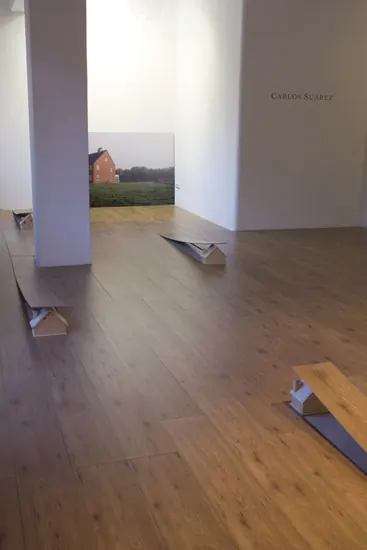
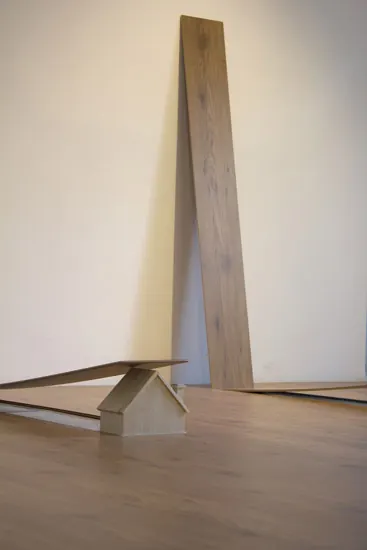
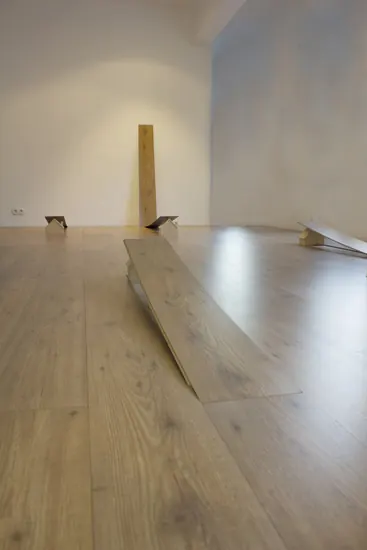
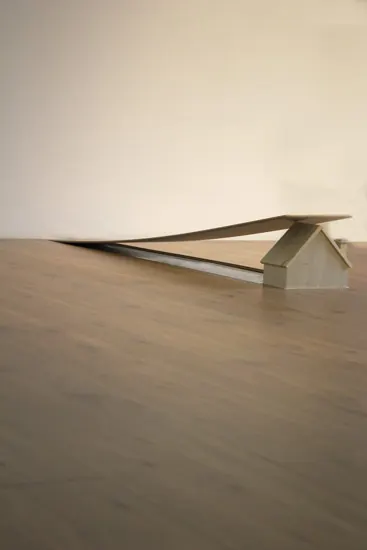
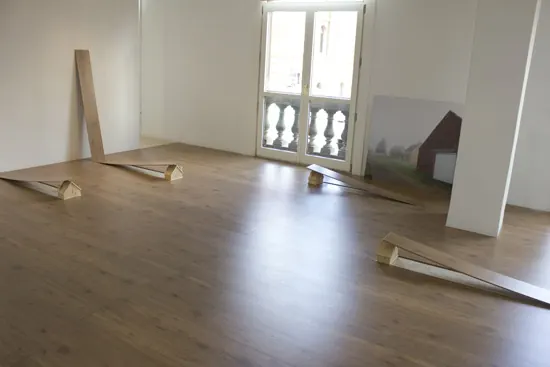
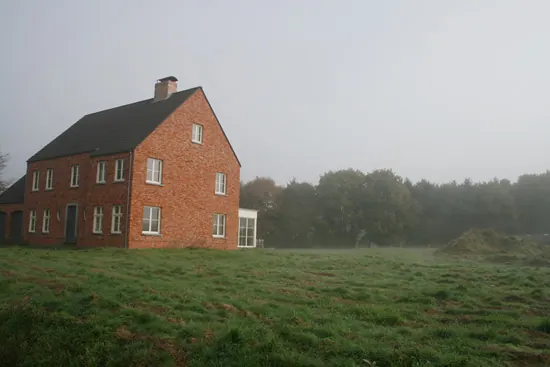
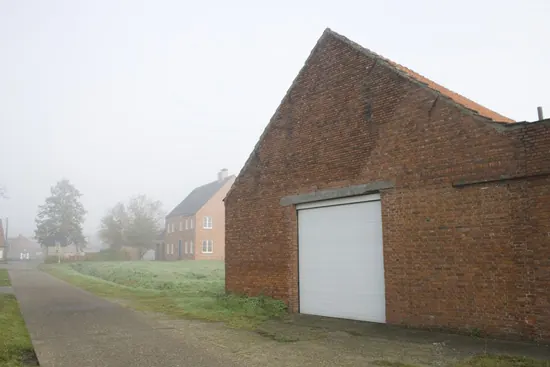
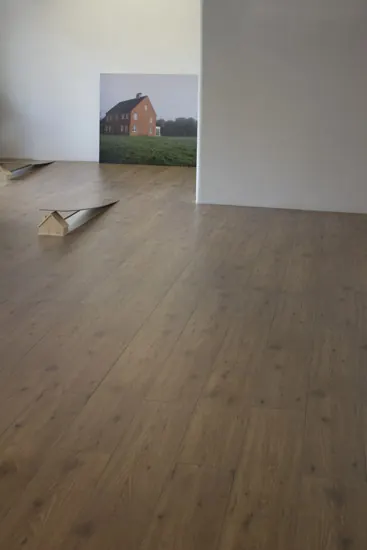
- Exhibition
- Galería Adriana Suárez. December 2011
Read the full text
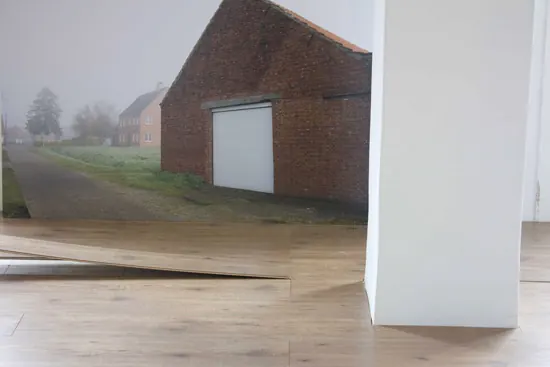
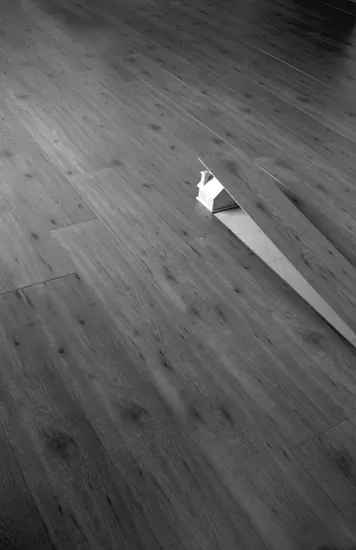
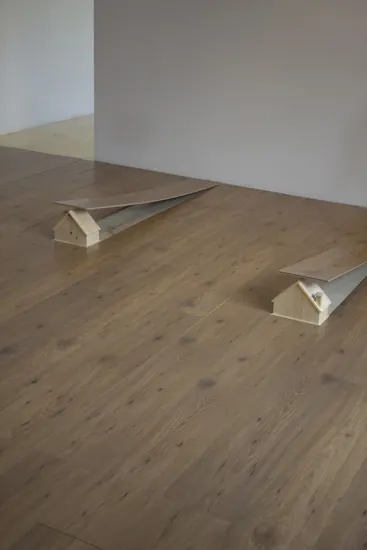
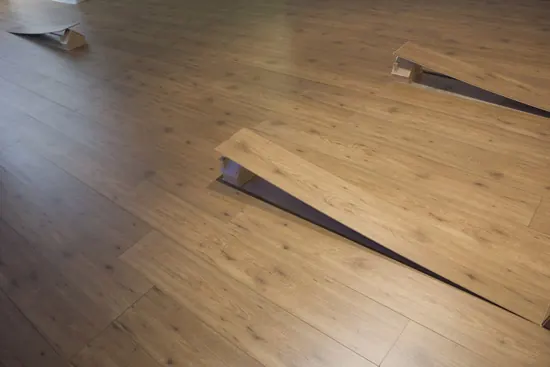
The idea of the architectural — and of the building par excellence: the house — lies at the heart of Carlos Suárez’s project. Ciudad satélite is the distillation of a series of works he has been developing around territory, memory, migration and the city. It is an installation combining sculpture and photography, based on two splendid and unsettling images of two detached houses he photographed on a trip to Belgium. They are houses “without memory”. The almost archetypal, compact and seemingly uninhabitable form of these houses (which nonetheless belong to a luxury housing development) is repeated in the small models that seem to break through here and there, in isolation, from beneath the wooden floor with which Suárez has covered part of the room: houses rising from within the space of the former home in which the gallery was set up, straining the slats beneath which they sprout. Houses within houses.
The whole sets off a many-sided game between exterior and interior, habitability and uninhabitability, and different scales, in order to provoke a feeling “of displacement, of uncertainty, of bewilderment…”, which is the very opposite of what we initially look for in the idea of the house — for Suárez, “the one that best defines, in Europe, our idea of the welfare society”. Yet paradoxically, according to the artist, there is “very little that is European, much forgetting of our own memory and much Americanisation” in this type of house, which “shows the difference between house and home, gives the impression of being in dead villages with no inhabitants inside” and seems self-absorbed, disconnected from any organic structure that might suggest a truly social idea of the city.
— Juan Carlos Gea, La Voz de Asturias, 4-12-2011